Keratoconus Diagnosis and Treatment
Keratoconus (KEHR-uh-toh-KOH-nus) is a corneal condition affecting approximately 1 in 3,000 patients that causes the front surface of the eye to warp and distort. Patients with this condition typically report distortion of their vision, including the development of “ghost” or doubled images, blurred vision that can’t be improved with glasses, or frustration with their quality of eyesight. It is not unusual for patients with corneal distortions to report difficulty driving, watching television, or reading and working on the computer.

Signs and Symptoms of Keratoconus
Keratoconus usually affects both eyes, but symptoms may differ between eyes. Signs are typically noted in younger patients but have been detected in the elderly, as well. Symptoms usually start to occur in people who are in their late teens and early twenties and may include:
- Mild blurring of vision
- Distortion of vision
- Sensitivity to light
- Glare
- Slight irritation
- Ghosting or doubling of images
Keratoconus progression varies, with some patients having significant blur and distortion and others being relatively asymptomatic. It can advance slowly or quickly.
Causes of Keratoconus
The cause of keratoconus is still not known. Some researchers believe genetics play a role since an estimated 10% of people with keratoconus also have a family member with the condition. Other studies have shown an association between eye rubbing and ocular allergy, so it is important to discuss these conditions with your doctor.
Treatment for Keratoconus
Early to Intermediate Stages of Keratoconus Treatment:
In the early to intermediate stages of keratoconus, where the corneal shape change is mild to moderate, treatment focuses on vision correction and potentially stopping the progression of the disease. Here’s a breakdown:
Vision Correction:
- Glasses: Effective in early stages for mild nearsightedness and astigmatism. However, as the cone progresses, glasses may not offer sufficient correction.
- Soft Contact Lenses: These can provide good vision in mild to moderate cases. However, they may become uncomfortable or unstable as the cone shape changes.
- Rigid Gas Permeable (RGP) Lenses: These offer better centration and stability on the irregular cornea, improving vision and comfort compared to soft lenses.
- Hybrid Contact Lenses: Combine a rigid center for correction with a soft skirt for comfort, offering a good balance between both.
Our contact lens specialists, Cara Robison, O.D. and Meredith Fry, O.D. specialize in keratoconus patients and can help fit the proper contacts for your condition. Both doctors have achieved national and international certifications, making them some of the most qualified in the world.
Stopping Progression:
- Corneal Cross-linking: Corneal cross-linking is one of the latest advancements in treatment for people with progressive keratoconus. iLink® FDA-approved epi-off cross-linking is a minimally invasive procedure that uses a combination of riboflavin (vitamin B2) eye drops and UV (ultraviolet) light to help increase the bonds between the collagen fibers in the cornea. This process will strengthen the cornea in order to slow down or totally stop the progressive weakening associated with keratoconus, and allow the cornea to maintain its shape. It’s most effective in the early stages. These procedures are performed by cornea specialist, Mark Morel, M.D. To learn more about this procedure visit our page on Corneal Cross-linking here.
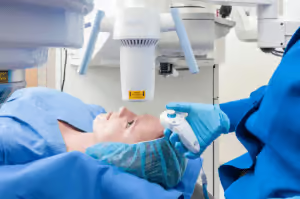
Corneal Cross Linking Procedure
Advanced Stages
- Scleral Lenses: These large-diameter rigid lenses vault over the irregular cornea, providing excellent vision and comfort even in severe cases. They require specialized fitting and adaptation.
- Corneal Transplant: When good vision or comfort is no longer possible with contact lenses, a corneal transplant is recommended. Our corneal surgeons, Mark Morel, M.D., Andre Cohen, M.D., and Puneet Panda, M.D. routinely perform this procedure. The surgery involves removing the diseased portion of the cornea and replacing it with healthy donor tissue. Overall, the procedure is only necessary in about 10-20% of patients with keratoconus. While a corneal transplant will relieve the symptoms of keratoconus, it may not provide you with flawless vision. Glasses or contacts may still be needed to achieve your best vision.
Keratoconus should only be treated by corneal specialists who have extensive backgrounds in studying cornea and corneal diseases. If you are experiencing any symptoms of keratoconus, contact us to schedule an appointment with one of our keratoconus experts, including Andre Cohen, M.D., Mark Morel, M.D., Puneet Panda, M.D., or Cara Robison, O.D.
For additional resources, we recommend visiting the National Keratoconus Foundation website at www.nkcf.org.
Set Up A Consultation
When it comes to your eyes, nothing beats a face-to-face consultation with one of our eye doctors. Request an appointment to meet with one of our specialists.