EDOF Lenses: Advantages and Disadvantages
October 10, 2024

Did you know that more than 24 million people in the US have cataracts and that cataract surgery is one of the most common types of eye surgeries across the globe? The surgery involves removing your natural lens and replacing it with an artificial intraocular lens. The removal of your natural lens is imperative because cataracts typically form on the lens of your eye, and in order to remove them, the entire natural lens has to be extracted. Because your natural lens needs to be removed, you’ll be asked about your preferred choice of intraocular lens.
Your eye surgeon at Marietta Eye Clinic will tell you about several different types of intraocular lenses, including monofocal, multifocal and EDOF, that can help you see clearly after your eye surgery. Extended Depth of Focus (EDOF) IOLs are one of the newer and more advanced types of intraocular lenses. These lenses were designed to help people who have presbyopia, which is age-related farsightedness, by extending the range of focus from intermediate through distant vision via an extended focal point. Let’s look at the advantages and drawbacks of EDOF lenses so that you can make an informed decision.
Why Are EDOF Lenses Growing in Popularity?
EDOF lenses are gaining in popularity over monofocal and standard multifocal lenses because they help eliminate the need for glasses at intermediate and long distances, and they offer improved contrast. This means that individuals can view a computer and drive without the need for additional corrective lenses.
Understanding the Mechanism of EDOF Lenses
EDOF lenses were designed to help people with presbyopia and cataracts. Presbyopia occurs when an individual loses the ability to see objects up close. As a result, it’s often referred to as age-related farsightedness. Extended Depth of Focus lenses can help individuals, who have both of these conditions, see clearly throughout a range of distances and lighting levels.
This is different than standard lenses, like the monofocal and multifocal lenses. Monofocal lenses are set to one distance, usually distance vision, because seeing far away aids in driving and viewing mounted menuboards in restaurants. Of course, this means that individuals with monofocal lenses need reading glasses to see up close.
In order to avoid the need for reading glasses, some people will choose multifocal lenses, which can contain near and distance prescriptions. However, standard multifocal lenses can result in seeing halos or glare at night. In order to avoid the downsides of mono and multifocal IOLs, individuals may choose EDOF lenses.
How do EDOF Lenses Work?
Extended Range of Vision or Extended Depth of Field IOLs utilize a single, elongated focal point in order to enhance visual acuity across a range of distances, usually intermediate to long-range. However, some individuals who have had certain EDOF lenses implanted report being able to see through the entire range of distances, from near to far.
EDOF Lens Advantages and Disadvantages
Extended depth of focus IOL lenses are a significant improvement over monofocal and multifocal lenses. However, like most IOL and corrective lens choices, they still have their benefits and drawbacks.
Advantages of Choosing EDOF Lenses
EDOF IOL lenses provide wearers with an extended range of vision. This means that individuals can read menus, work on a computer and drive without having to worry about blurry vision, loss of light or clarity.
Choose a Premium Lens to Reduce Your Need for Glasses
An extended depth of focus IOL or EDOF lens is a premium lens option that can help you see normally without the need for additional corrective lenses. This is because the lens allows you to see intermediate distances, like your computer screen, and far away. Prior to the invention of multifocal and EDOF lenses, individuals only had one option, monofocal lenses. While these were great for eliminating cataracts and helping people see far away, they often resulted in the need for reading glasses and/or computer glasses. Individuals, who wish to reduce or eliminate the need for glasses, may prefer EDOF lenses.
EDOFs Result in Fewer Visual Disturbances
Visual disturbances include glare and halos. These issues can be common in people who receive standard multifocal lenses, especially when switching between distances. By contrast, EDOF intraocular lenses result in fewer instances of glare and halos, even while driving at night. This results in improved night vision and better contrast.
Extended Depth of Focus IOL Lenses Often Result in Increased Patient Satisfaction
When EDOF lenses are used to replace the natural lens during cataract surgery, most patients are satisfied with the outcome. In a study entitled, ‘Visual outcomes and patient satisfaction 1 and 12 months after combined implantation of extended depth of focus and trifocal intraocular lenses’, 93 percent of patients indicated that they were satisfied with the outcome or more than satisfied. In the same study, more than 80 percent indicated that they did not need glasses.
Potential Disadvantages and Considerations Before Getting EDOF IOLs
It’s important to understand the extended depth of focus IOL pros and cons before making a decision. That’s because EDOFs aren’t for everyone. The good news is that if you don’t feel like EDOFs would be best for you, there are plenty of other IOL options.
You May Still Need Reading Glasses
EDOFs are designed to provide intermediate to distant vision. This means that in order to see things at a very close distance or to read small print, you may still need reading glasses.
EDOFs Can Be Expensive
If you’re worried about cost or have a very limited budget, EDOFs may not be for you. It’s important to understand that cataract surgery isn’t typically covered under vision plans. Instead, if it’s deemed medically necessary, it may be covered under your health insurance. However, most health insurance plans only cover monofocal lenses. This means that you may need to pay out of pocket for your EDOF lenses. The good news is that there are several ways you can pay, including paying for your lenses in cash, using an HSA or FSA account or applying for financing at CareCredit.
EDOFs Need an Adjustment Period
Extended depth of focus lenses do require an adjustment period before the individual receives the maximum visual acuity from the lenses. This is because the eyes need time to heal, and the brain needs time to adjust to the new lenses. This is called neuroadaptation, and it can take as long as 12 months to fully acclimate to the new IOL. In a handful of cases, usually about 10 percent, the patients’ brain never adapts to the new IOLs.
Ideal Candidates for EDOF Lenses
EDOF lenses most often benefit individuals who lead active lifestyles and require vision across a range of distances. If you like to golf, garden, cook, drive a car or golf cart, spend time on a computer or watch TV, you may prefer the enhanced range of vision offered by EDOF IOLs.
Desire Less Reliance on Glasses
If you’re someone who dislikes having to wear glasses for most tasks, you’ll like EDOF lenses. The extended depth of focus allows individuals to perform many activities without additional corrective lenses. The only exception to this is reading fine print or performing work that requires very near vision.
Have Healthy Eyes
Your eyes should be healthy, aside from the cataracts. Individuals with conditions, like macular degeneration, don’t typically do well with EDOF lenses.
How Marietta Eye Clinic Helps in EDOF Lens Implementation
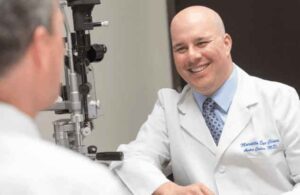 At Marietta Eye Clinic, we take vision and eye health seriously. This means that we use state-of-the-art technology both in our eye clinics and at our surgery center, which is located in Marietta, GA. Our experienced eye surgeons will evaluate your cataracts and eye health in order to determine if you’d be a good candidate for cataract surgery with EDOF lenses or another type.
What do our patients say?
Part of making an informed decision is reading about other former patients’ experiences. Marietta Eye Clinic is honored that our current and former patients think of us as caring, kind, courteous, friendly and professional. Catherine A. was amazed by Dr. Johnson’s easy-to-understand explanations. Rebecca H. found Dr. Johnson’s explanations of various types of IOLs very helpful when it came to choosing the right intraocular lens. Of course, we also have other eye surgeons that can help you with your cataracts, including Dr. Panda and Dr. Cohen and others. If you’re ready to have your cataracts removed so that you can see clearly, our eye surgeons and ophthalmologists are ready to help you.
Making an Informed Decision
EDOF IOL lenses can help you see clearly if you have presbyopia and cataracts. These lenses are unique in the fact that they have one focal point across multiple distances, which means individuals will experience less glare and halos. They work well for individuals who live active lifestyles and who want to reduce their reliance on glasses after surgery.
To learn more about EDOF lenses and if you’d make a good candidate, give our eye surgeons a call at 770-427-8111 to schedule an initial consultation. Cataract surgery consultations are designed to answer your questions and assess your eyes to determine the best IOL for you and to explain the cataract surgery process, from consultation to aftercare.