What to Expect When Having Cataract Surgery by Shunai Jiang, M.D., Ph.D.
April 28, 2020
When cataracts progress enough that they keep you from doing things you need or want to do, your ophthalmologist will likely recommend cataract surgery. It is the only treatment option that reverses the effects of cataracts. Though the idea of having eye surgery may make some people nervous, cataract surgery is one of the safest and most commonly performed procedures in the United States. In addition to removing cataract, cataract surgery offers refractive benefits that may mean better eyesight without glasses than you had even before cataracts. The decision of when to have cataract surgery, what type of intraocular lens to have implanted, and how the surgery is performed will be unique to every individual based on their eyes, their health, and their vision preferences. Knowing what to expect can help you make those decisions.
Before Cataract Surgery
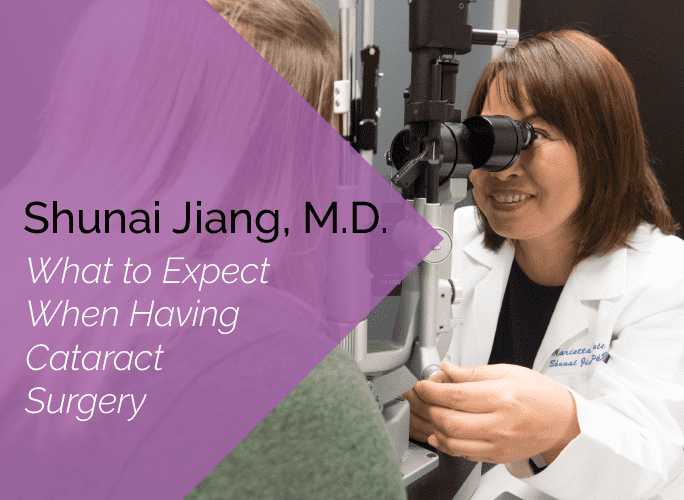
To begin, you will undergo a cataract evaluation to determine if you are a good candidate for cataract surgery. You should expect this evaluation to last a couple of hours because your ophthalmologist will need a lot of information about your eyes to prepare for surgery. The cataract evaluation begins with an interview with an ophthalmic technician, who will ask about your current medications, your medical history, and your cataract symptoms. You will undergo a variety of diagnostic tests to help determine the best type of lens and lens power for your lens replacement. Next, you will meet with the ophthalmologist who will perform your surgery. Your surgeon will discuss your symptoms and vision concerns with you. They will also conduct a dilated exam to rule out the possibility of other eye diseases that could be affecting your vision. Finally, a surgery coordinator will schedule your surgery date, review your insurance coverage, and coordinate any other medical appointments you may require before surgery, such as with a cardiologist, a pulmonologist, or a primary care doctor.
During Cataract Surgery
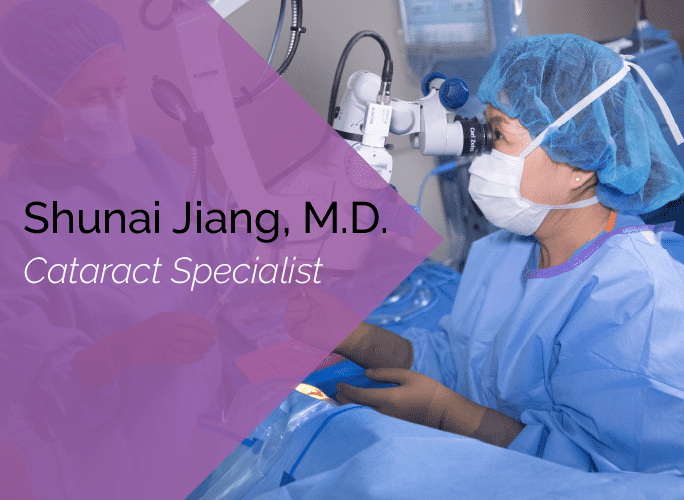
Cataract surgery usually takes no longer than 20 minutes. You should, however, expect to be in the surgery center for up to 2 hours because of prior surgery preparation and after-surgery monitoring. You should arrange for someone to stay in the surgery center and drive you home after the procedure.
Before the surgery, anesthetic eye drops are administered. To begin, two small incisions are made on the surface of you eye. An ultrasound probe is inserted into the incision and used to break up the cataract. The cataract pieces are then suctioned out. The replacement intraocular lens is inserted through one of the incisions. You will not be able to feel this lens once it is inserted. In most cases, stitches are not required and the incisions will self-seal. Most patients report little, if any, discomfort.
After Cataract Surgery
Cataract surgery is usually performed on one eye at a time to allow the first eye time to heal before the second cataract is removed. It takes about 4 weeks for the eye to completely heal. Most patients will need glasses for some activities, but the level of dependency on glasses should be greatly reduced after surgery for all patients.
Ask Your Ophthalmologist if You Have Questions about Your Cataracts
If you are experiencing symptoms of cataracts and you feel they are holding you back, it may be time to schedule a cataract evaluation with your ophthalmologist. If you and your doctor decide cataract surgery is the best course of action, your surgical team will guide you every step of the way to help you make the best decisions for your health and your vision goals.
More About Cataract Specialist Shunai Jiang, M.D., Ph.D.
Dr. Jiang is an ophthalmologist at the Marietta Eye Clinic who specializes in cataracts and glaucoma. She serves the Kennestone, Canton, and East Cobb locations. Dr. Jiang studied at Jilin University in China and the Karolinska Institute in Sweden, the home of the Nobel Prize in Physiology or Medicine. She received her residency training in ophthalmology from the University of Louisville and fellowship training in glaucoma from Emory University. She is a member of the American Academy of Ophthalmology and the American Glaucoma Society. Read her full bio here.
References and Additional Resources
The American Academy of Ophthalmology (AAO) is the world’s largest association of eye physicians and surgeons. It describes itself as a “global community of 32,000 medical doctors who protect sight and empower lives by setting the standards for ophthalmic education and advocating for our patients and the public.” Its website is a great resource to learn more about how to care for your eyes.
The American Optometric Association (AOA) describes itself as the leading authority on quality care and an advocate for our nation’s health, representing more than 44,000 doctors of optometry, optometric professionals, and optometry students.
What Are Cataracts?
https://www.aao.org/eye-health/diseases/what-are-cataracts
Cataract Surgery
https://www.aao.org/eye-health/diseases/what-is-cataract-surgery
Cataract Diagnosis and Treatment
https://www.aao.org/eye-health/diseases/cataracts-treatment
IOL Implants: Lens Replacement After Cataracts
https://www.aao.org/eye-health/diseases/cataracts-iol-implants
Set Up A Consultation
When it comes to your eyes, nothing beats a face-to-face consultation with one of our eye doctors. Request an appointment to meet with one of our specialists.