How YAG Laser Capsulotomy Corrects “Secondary Cataracts”
August 25, 2023

Have you heard of YAG laser surgery? If you have, you may know that it’s a revision surgery after an individual has had cataract surgery. Not everyone will need YAG surgery but take a look at this type of revision eye surgery and how it can help with complications that may arise from cataract surgery.
What is the primary reason individuals need revision surgery for cataracts?
Like any surgery cataract surgery can result in complications, including intraocular lens dislocation, swelling, infection, fluid buildup, retinal detachment and secondary cataracts, with secondary cataracts being the most common type of complication after cataract surgery.
What is a secondary cataract?
Secondary cataracts are called posterior capsule opacification (PCO). When undergoing cataract surgery, your natural lens is replaced with an artificial lens. This is done by making an incision in the cornea and removing the cloudy lens, which is usually just the front part of the lens. The lens capsule is left in place and provides a base for the new artificial lens.
Secondary cataracts form when epithelial cells form on the anterior capsule and colonize on the posterior capsule. While that explanation sounds complicated, it’s just scar tissue that forms on the remaining part of the natural lens, behind the implanted lens. This can result in halos and cloudy vision, which is similar to the symptoms that occur with initial cataracts.
What is a YAG laser and how does it help with secondary cataract complications?
Secondary cataracts can form anywhere from a few weeks after surgery to a few years. Therefore, it’s important to remain vigilant and report any changes in vision to your eye doctor. When we talk about YAG revision surgery, we’re talking about a surgery that involves a special type of laser called a yttrium aluminum garnet laser. This laser is used to make a few very small holes in the remaining capsule, which allows light to pass through to the retina and improves vision.
What’s so special about the YAG laser?
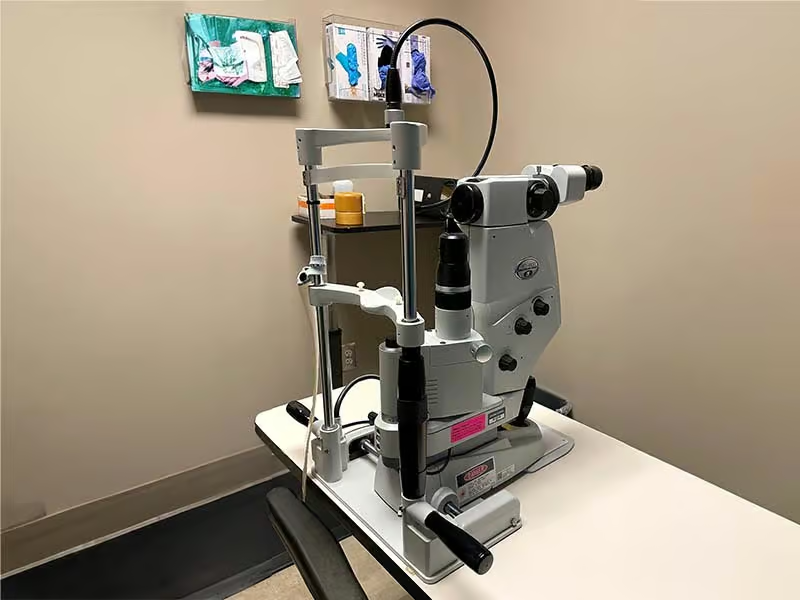
YAG laser surgery is non-invasive, and the official name of the surgery is Posterior Capsulotomy. Just prior to the surgery, you’ll be given eye drops to dilate your eyes and numbing drops to ensure the procedure is as painless as possible. You may also be given a mild sedative to ensure you’re calm during the procedure. It’s important to note that the sedative will not put you to sleep, but you may feel groggy.
During the eye surgery, you’ll be seated in front of a machine that looks a lot like a standard eye testing machine. A special lens will be placed in front of your eye to magnify the area. The YAG laser is aimed at the back of the eye and used to create a few very small holes in the posterior surface of the capsule.
YAG laser revision surgery can be performed within a few days after cataract surgery. However, most eye doctors prefer to wait a few months in order to ensure any inflammation in the eye that was the result of the initial cataract surgery has gone down.
Where is YAG surgery performed?
YAG revision surgery is performed as an outpatient procedure at an eye surgery center, like our Marietta Eye Surgery Center. Since your eyes are dilated and you may be groggy after the procedure, it’s important to have someone drive you to your appointment and drive you home.
How long does YAG take?
Yag revision surgery takes between 10 and 20 minutes. Prior to the surgery, you will be given an eye exam to test your current vision. Once your current vision is known, you’ll be taken to the area where your YAG surgery is to take place and prepared for the procedure.
How do I prepare for YAG laser eye surgery?
Your YAG laser eye surgery has the same preparations as your initial cataract surgery. You’ll be given eye drops to put into your eye the day before the surgery. We do ask that you stop eating at midnight the night before your YAG surgery, unless our nurse has told you otherwise.
You will need to shower or bathe on the morning of your surgery. However, we ask that you do not use any lotions, makeup or perfumes. You can wear loose-fitting clothing to your appointment so that you are comfortable, and you’ll need someone to drive you to and from the procedure. If you take any medications, please talk to our nurse. You may be advised not to take them on the morning of your surgery.
How does a YAG laser help in my recovery?
If you’ve recently had cataract surgery, having YAG surgery can help eliminate the potential of a cloudy posterior lens. This helps remove the chances of experiencing secondary cataracts and the cloudy, blurry vision that may follow.
What are the statistics for experiencing secondary cataracts and needing YAG surgery?
According to the NIH, YAG surgery is needed in about 20 to 25 percent of cataract surgery cases. It is the most common type of revision surgery after cataract surgery. The NIH reported that 4.5 percent of patients need YAG 12 months after cataract surgery. Ten percent need YAG after two years, and 12 percent need YAG after three years.
What does my recovery from YAG laser capsulotomy surgery look like?
You may notice an improvement in your visual acuity immediately, but it can take up to 24 hours. Most people can resume normal activities after the surgery. However, you do not want to rub your eyes or get soap or water in your eyes. We also recommend that you do not swim for at least 5 days after your surgery. This includes using hot tubs and saunas. After your surgery, our eye doctor will give you eye drops to help prevent infection. You’ll need to take those for about a week. If there are any other limitations for your specific circumstances, our eye doctor will let you know and provide you with a pose-op set of instructions.
How long does it take to recover from YAG laser capsulotomy surgery?
Complete YAG recovery can take as long as a week. Our eye doctor will let you know your total recovery time and if you need any follow-up appointments.
Does Medicare typically cover this procedure?
Medicare covers medically necessary procedures. Cataract and YAG surgery are typically covered under Medicare Part B. However, it’s always important to review your coverage prior to the surgery to make sure it is covered.
YAG surgery is recommended for individuals who develop secondary cataracts after their initial cataract surgery. This can occur anywhere from a few days to a few years after your initial surgery. The good news is that if you need YAG, you’ll only need it once. Secondary cataracts do not return.
To learn more about cataract surgery and YAG and to schedule an appointment, please contact our office at 770-427-8111.