Getting to the Bottom of Dry Eye by Puneet Panda, M.D.
May 13, 2020
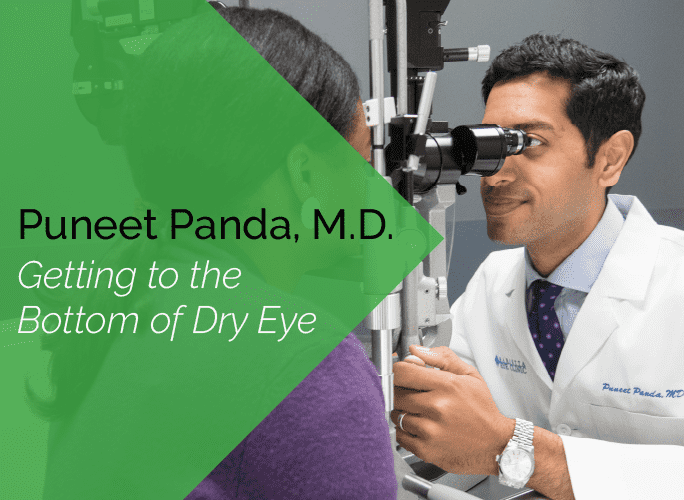
Dry eye disease, also referred to as dry eye syndrome, is the medical diagnosis for the umbrella term “dry eyes,” which refers more to the symptoms than an underlying issue. There are multiple subtypes of dry eye disease, and each is treated differently. Only a medical professional can determine what causes dry eye in an individual and the best way to manage it, as the cause may inevitably be an underlying medical condition and not solely from the surface of the eye.
Dry eye syndrome affects many people, and patients are often unaware that symptoms they are experiencing are indicators of dry eye. There are several very effective ways to treat this condition and bring relief. If you experience these symptoms or if you spend a lot of time in front of a computer screen, watch this video to learn more about this common and very treatable condition.
The Tear Film
The eye is coated in what is called the tear film, which is spread over your eye every time you blink. The tear film is made up of 3 layers: an oil layer, a water layer, and a mucus layer, all of which must be balanced for a comfortable sensation over the eye. When any one of these layers is interrupted, the tear film is unable to adequately perform its job, which can lead to dry eye. There are two main types of dry eye: aqueous deficiency and evaporative dry eye.
Aqueous Deficiency Dry Eye
In aqueous deficiency dry eye, the lacrimal gland fails to produce enough aqueous, the water layer of the tear film. When not enough aqueous is produced, the tear film is unable to adequately keep the eyes moist. Aqueous deficiency dry eye often occurs as a result of age, certain systemic diseases, and taking certain medications.
Evaporative Dry Eye
Evaporative dry eye is the most common type of dry eye. Evaporative dry eye refers to dry eye that results when tears evaporate too quickly. It is often caused by a malfunction involving the oil layer of the tear film due to meibomian gland dysfunction. When the meibomian gland is blocked, not enough oil is produced or secreted. This is common in people who have skin conditions like rosacea.
Evaporative dry eye can be caused or made worse by environmental factors. Wind, dry air, and smoke can all lead tears to evaporate more quickly. People who read a lot or spend a lot of time in front of a computer screen or cellphone may find that they experience dry eye as a result of blinking less often.
Though uncommon, evaporative dry eye can be caused by abnormalities with the eyes or eyelids. Some people do not completely close their eyelids while blinking or sleeping, a condition referred to as lagophthalmos. This can occur due to genetics, aging, eyelid surgery, or other causes.

Diagnosis and Treatment Options
Because dry eye symptoms can have more than one cause, a proper diagnosis requires comprehensive testing. Typically, an ophthalmologist will examine your eyes, eyelids, and corneas. They may also measure the amount of tears in your eyes and your rate of tear production. The recommended treatment will depend on the underlying cause of dry eye, and you may need to try a few different treatment options or combine treatments to adequately manage your dry eye.
Common treatments for dry eye include:
- Artificial tears, over-the-counter (OTC) eye drops that simulate real tears. These can be used as often as necessary. Eye drops that contain preservatives may irritate your eyes if used frequently, so preservative-free eye drops are recommended.
- Punctal plugs. These are silicone or gel plugs that are inserted into your tear ducts to keep tears from draining out of your eyes. Punctal plugs can be removed if desired, while some naturally dissolve.
- Medicated eye drops. You may be prescribed medicated eye drops to encourage tear production and treat irritation. Commonly prescribed medicated eye drops include RESTASIS®, Cequa, and Xiidra®.
- Ointment may be prescribed to treat irritation.
- Prokera amniotic membrane graft contact lens. These lenses are used to reduce inflammation and prevent corneal scarring.
- LipiFlow treatment. This procedure uses controlled heat and adaptive pressure to remove blockages in the meibomian glands and encourage oil production in the tear film.
- Intense Pulsed Light (IPL) photofacial treatments. During this procedure, laser light is used to correct meibomian gland mysfunction that causes evaporative dry eye. This is a type of neurostimulation, or stimulation of the nervous system, meant to increase tear production.
There are also things you can do at home to reduce severity of symptoms, such as using warm compresses or massaging your eyelids. If these remedies may be beneficial to you, your eye doctor can discuss them with you in detail.
A Thorough Exam is Required for an Accurate Diagnosis
The most important thing to remember with dry eye is that appropriately treating the problem requires an accurate diagnosis. You’ll receive the best care from a dry eye specialist, an ophthalmologist with a background in treating dry eye. If you suspect you may be suffering from dry eye, don’t hesitate to schedule an appointment. Identifying the root of the problem will help you find the best relief from dry eye symptoms.
More About Dry Eye Specialist Puneet Panda, M.D.
Dr. Panda is an ophthalmologist at the Marietta Eye Clinic who specializes in dry eye, cataracts, LASIK, and cornea, in addition to offering comprehensive ophthalmic care. Dr. Panda graduated from Cornell University with an undergraduate degree in biological and environmental engineering. He received his medical degree from the State University of New York at Buffalo and completed his residency at Mount Sinai Hospital in New York. He completed his fellowship in Cornea and Refractive Surgery from the Wilmer Eye Institute of Johns Hopkins University. He is a member of both the American Academy of Ophthalmology and the American Society of Cataract and Refractive Surgeons. Read more about Dr. Panda here.
References and Additional Resources
The American Academy of Ophthalmology (AAO) is the world’s largest association of eye physicians and surgeons. It describes itself as a “global community of 32,000 medical doctors who protect sight and empower lives by setting the standards for ophthalmic education and advocating for our patients and the public.” Its website is a great resource to learn more about how to care for your eyes.
The American Optometric Association (AOA) describes itself as the leading authority on quality care and an advocate for our nation’s health, representing more than 44,000 doctors of optometry, optometric professionals, and optometry students.
Is It Dry Eye Disease?
https://www.aao.org/interview/is-it-dry-eye-disease
Remedies to Reduce Dry Eye Symptoms
https://www.aao.org/eye-health/tips-prevention/dry-eye-tips
Dry Eye
https://www.nei.nih.gov/learn-about-eye-health/eye-conditions-and-diseases/dry-eye
Dry Eye Diagnosis and Treatment
Set Up A Consultation
When it comes to your eyes, nothing beats a face-to-face consultation with one of our eye doctors. Request an appointment to meet with one of our specialists.