Diabetes, the Sneaky Blinders
December 7, 2021
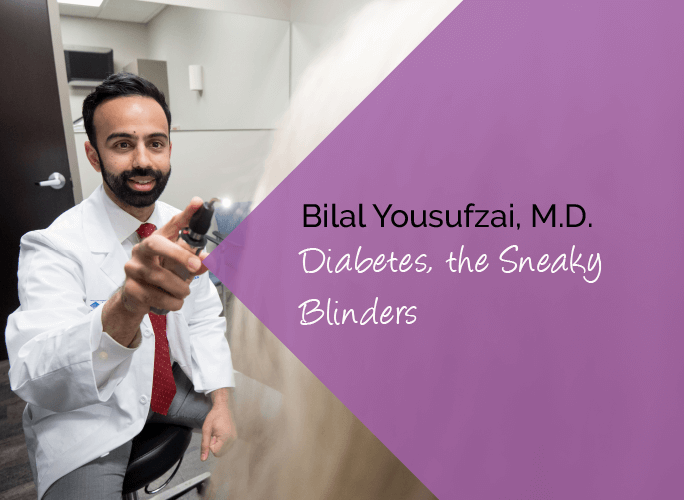
Diabetes can damage the heart, kidneys, and blood vessels. It damages small blood vessels in the eye as well. Studies show that 60% of diabetics are not getting the yearly eye exam their doctors recommend. Patients with type 1, type 2, and gestational diabetes are at risk of developing diabetic eye disease. Often, there are no warning signs of diabetic eye disease or vision loss when damage first develops. Fortunately, in 95% of cases, vision loss can be prevented with early detection through an annual dilated eye exam.
What are the Symptoms of Diabetic Eye Disease?
Diabetic eye disease is progressive, and many times patients do not notice the deterioration until it’s too late. Over time, diabetes can cause damage to your eyes that can lead to poor vision or even blindness. Equipped with the knowledge of common symptoms of diabetic eye disease can allow you to seek treatment and prevent further damage.
These symptoms include:
- Frequently changing vision or blurred vision
- Light sensitivity
- Inability to see at night or in dim lighting.
- Blind spots
- Colors appearing washed out
- Increased floaters
- Double vision
- Peripheral vision loss
What are Diabetic Eye Diseases?
According to the American Ophthalmology Association (AAO), Diabetic Retinopathy is a leading cause of visual impairment in working-age adults. There are two stages of diabetic retinopathy. The early-stage causes tiny blood vessels to leak, making the retina swell. The more advanced stage of diabetic retinopathy causes the retina to start growing new blood vessels (neovascularization). These fragile new vessels often bleed into the vitreous, causing dark floaters and blind spots in vision. In severe cases, these blood vessels form scar tissue and can lead to a detached retina.
Common Eye Diseases Related to Diabetes:
- Diabetic Macular Edema – The macula is the part of your retina needed for reading, driving, and seeing faces. Diabetes can lead to swelling in the macula and over time can cause partial vision loss or blindness.
- Cataracts – Excess blood sugar from diabetes can speed up the development of cataracts. Cataracts are the clouding of the lens that results in blurry vision, light sensitivity, inability to see in dim lighting, and poor color vision.
- Glaucoma – According to the American Optometric Association (AOA), diabetes doubles your chance of getting glaucoma. Glaucoma is a group of diseases that cause damage to the optic nerve and lead to loss of peripheral vision.
- Other Eye Diseases – Diabetes can also cause other eye problems such as branch retinal vein occlusion (BRVO) and central retinal vein occlusion.
How is Diabetic Eye Disease Treated?
There are many options for patients who have been diagnosed with diabetic eye diseases:
- Medication – one type of medication is called anti-VEGF treatment. These medicines block the growth of abnormal blood vessels in the eye.
- Laser treatment – also called photocoagulation, creates tiny burns inside the eye with a beam of light. This method treats leaky blood vessels and extra fluid, called edema.
- Vitrectomy – a surgery to remove the clear gel that fills the center of the eye called the vitreous gel.
How Can Someone Prevent Diabetic Eye Disease?
The good news is that you can reduce your chances of diabetic eye disease and vision loss by managing your overall health.
- Control your blood sugar
- Maintain healthy blood pressure and cholesterol levels
- Quit smoking
- Exercise
The most important step in preventing vision loss is early detection with annual dilated eye exams. Patients may not notice symptoms for years after an eye disease begins to develop. Many eye diseases are initially painless and cause little to no vision changes. With the risks diabetes brings, the ophthalmologists and optometrists at the Marietta Eye Clinic strongly encourage you to seek an appointment to help you keep the best vision possible for the longest time possible.
More About Retina Specialist Bilal Yousufzai, M.D.
Dr. Bilal Yousufzai is an expert ophthalmologist and fellowship-trained retina specialist. He sees patients at our Acworth, East Cobb, Paulding, Roswell, and Kennestone offices. Dr. Yousufzai graduated magna cum laude with high honors with his undergraduate degree from the University of Georgia. He received his medical degree from the Medical College of Georgia at Augusta University. He is a member of the American Academy of Ophthalmology, the American Society of Retina Specialists, and the Association for Research in Vision and Ophthalmology.
References and Additional Resources
The American Academy of Ophthalmology (AAO) is the world’s largest association of eye physicians and surgeons. It describes itself as a “global community of 32,000 medical doctors who protect sight and empower lives by setting the standards for ophthalmic education and advocating for our patients and the public.” Its website is a great resource to learn more about how to care for your eyes.
The American Optometric Association (AOA) describes itself as the leading authority on quality care and an advocate for our nation’s health, representing more than 44,000 Doctors of Optometry (O.D.), optometric professionals, and optometry students.
https://www.aao.org/eye-health/diseases/what-is-diabetic-retinopathy
https://www.aao.org/eye-health/diseases/diabetic-retinopathy-treatment
https://www.aao.org/eye-health/tips-prevention/top-five-diabetes-steps
https://www.aao.org/eye-health/diseases/diabetic-eye-disease
https://www.aao.org/eye-health/news/sixty-percent-skip-diabetic-eye-exams
https://www.diabetes.org/resources/statistics/statistics-about-diabetes
Set Up A Consultation
When it comes to your eyes, nothing beats a face-to-face consultation with one of our eye doctors. Request an appointment to meet with one of our specialists.