Taking Care of Your Eyes at Ages 40-54 by Puneet Panda, M.D.
June 22, 2020
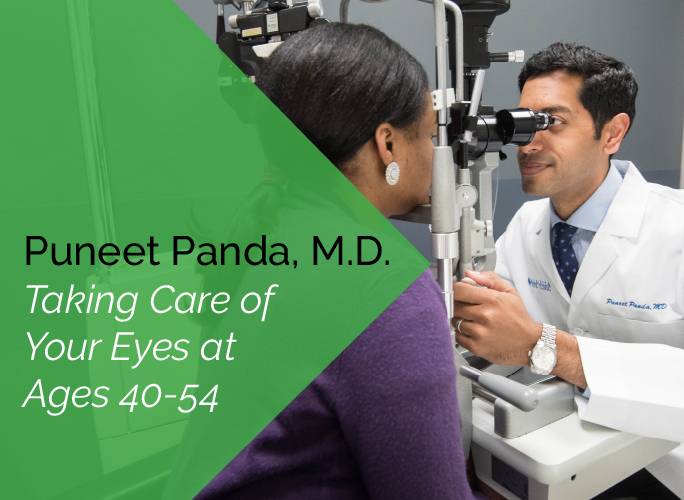
Your vision is an essential part of your quality of life. Although most vision loss can be prevented if caught early, many people don’t get eye exams as often as recommended. Proper preventative care gives you the upper hand in keeping your eyes healthy and your vision clear.
Start with a Baseline Exam
Around age 40, early signs of eye disease and changes in vision start to occur. It’s a good idea to get a baseline exam at this age. Your optometrist or ophthalmologist can give you a recommended exam schedule based on the results of your exam and your overall health. The results of your baseline exam will be compared to results of future exams to monitor changes in your eyes.
How Often Most People Ages 40-54 Need Eye Exams
The American Academy of Ophthalmology recommends comprehensive eye exams at least every 2 to 4 years for people ages 40 to 54 who have no symptoms of eye disease and can see clearly. During comprehensive eye exams, optometrists and ophthalmologists check for damage from health conditions such as diabetes and look for signs of eye diseases that can lead to blindness, such as glaucoma or cataracts. Some symptoms of ocular disease may go unnoticed until the disease is advanced. Regular comprehensive exams allow your eye doctor to catch signs of ocular disease before the disease has progressed, when it is the most treatable.
People Ages 40-54 Who May Need Eye Exams More Often
A combination of factors may affect your recommended frequency of comprehensive eye exams. Here are a few common reasons to increase your frequency of eye exams from the above guidelines:
- You wear glasses or contact lenses.
- You have a family history of eye disease, such as macular degeneration, glaucoma, or cataracts.
- You have a chronic disease that puts you at greater risk of eye disease, such as diabetes or hypertension.
- You take medications that may have serious eye-related side effects, such as prednisone or plaquenil.
If any of the above is true for you, speak to your optometrist or ophthalmologist about how often you should schedule comprehensive eye exams.
Don’t Put Off Scheduling an Appointment
Routine eye exams have been proven to help combat major eye health issues and prevent blindness. Keep in mind the guidance above, and please reach out to an optometrist or ophthalmologist if you are at a higher risk of developing eye disease or vision problems.
More About Comprehensive Ophthalmologist Puneet Panda, M.D.
Dr. Panda is an ophthalmologist at the Marietta Eye Clinic who specializes in dry eye, cataracts, LASIK, and cornea, in addition to offering comprehensive ophthalmic care. Dr. Panda graduated from Cornell University with an undergraduate degree in biological and environmental engineering. He received his medical degree from the State University of New York at Buffalo and completed his residency at Mount Sinai Hospital in New York. He completed his fellowship in Cornea and Refractive Surgery from the Wilmer Eye Institute of Johns Hopkins University. He is a member of both the American Academy of Ophthalmology and the American Society of Cataract and Refractive Surgeons. Read more about Dr. Panda here.
References and Additional Resources
The American Academy of Ophthalmology (AAO) is the world’s largest association of eye physicians and surgeons. It describes itself as a “global community of 32,000 medical doctors who protect sight and empower lives by setting the standards for ophthalmic education and advocating for our patients and the public.” Its website is a great resource to learn more about how to care for your eyes.
The American Optometric Association (AOA) describes itself as the leading authority on quality care and an advocate for our nation’s health, representing more than 44,000 doctors of optometry, optometric professionals, and optometry students.
Eye Exam
https://www.mayoclinic.org/tests-procedures/eye-exam/about/pac-20384655
Eye Exam and Vision Testing Basics
https://www.aao.org/eye-health/tips-prevention/eye-exams-101
Frequency of Ocular Examinations – 2015
https://www.aao.org/clinical-statement/frequency-of-ocular-examinations
Set Up A Consultation
When it comes to your eyes, nothing beats a face-to-face consultation with one of our eye doctors. Request an appointment to meet with one of our specialists.